CARIC 2026: Love, Hades, and Autonomous Cars
It was another fantastic year for faculty and students across Concordia University of Edmonton to showcase their research and academic works to peers and community partners.
Over 75 posters were showcased on Friday afternoon as part of the poster presentation and mixer (generously sponsored by Denvr Dataworks). Students, faculty, staff, and community guests all got a chance to walk Tegler Student Centre and the Judy Kruse Commons as research and academic works were proudly displayed and explained.
On Saturday, the research and academic presentations continued with the oral presentations held in Braaksma Hall. There were a total of 20 oral presentations covering topics from autonomous car data security to the investment patterns of Gen Z to the accuracy and depiction of classical Greek mythology in modern pop culture (specifically video games).
Below are a few examples and highlights of all the incredible work showcased by everyone involved with CARIC 2026.
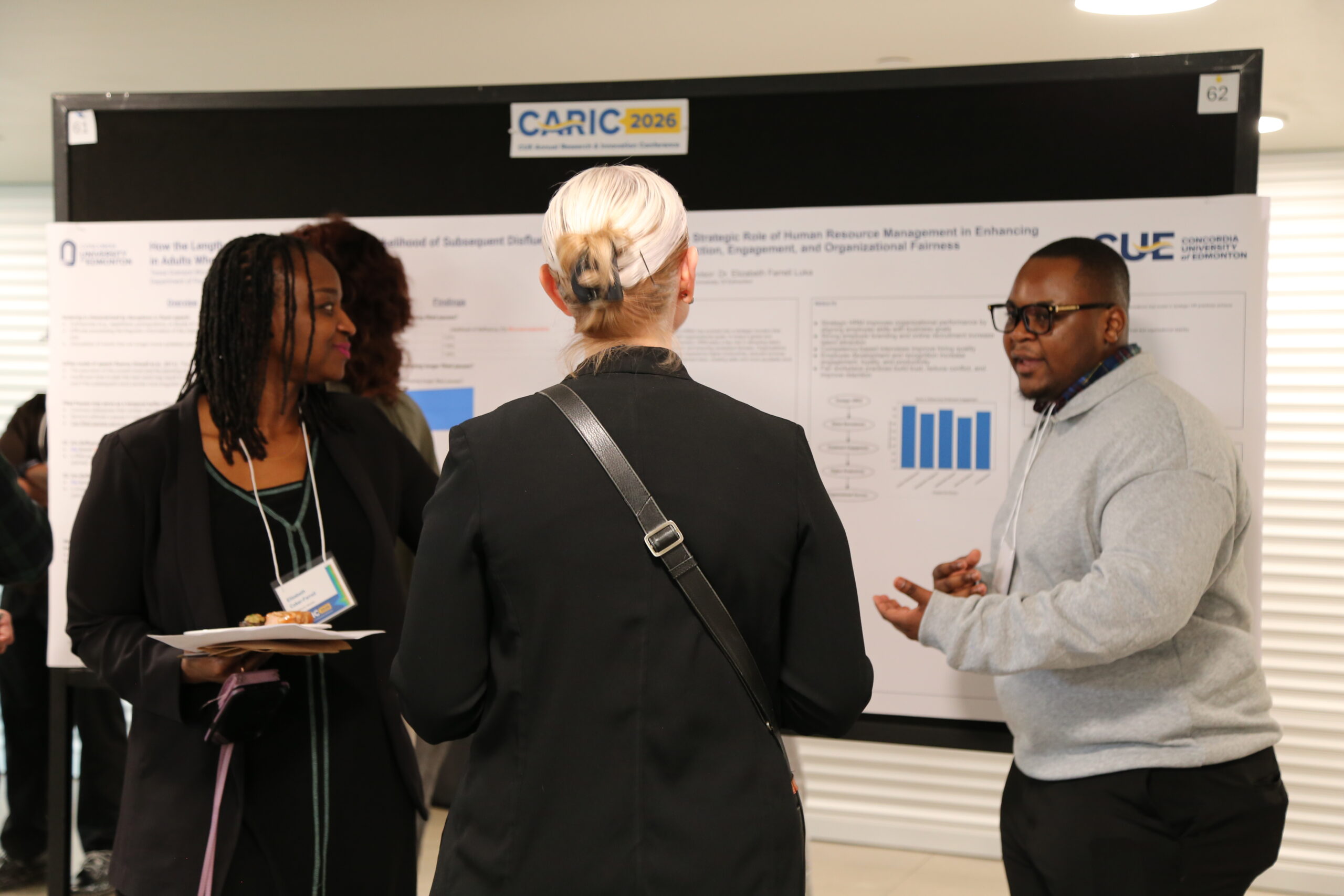
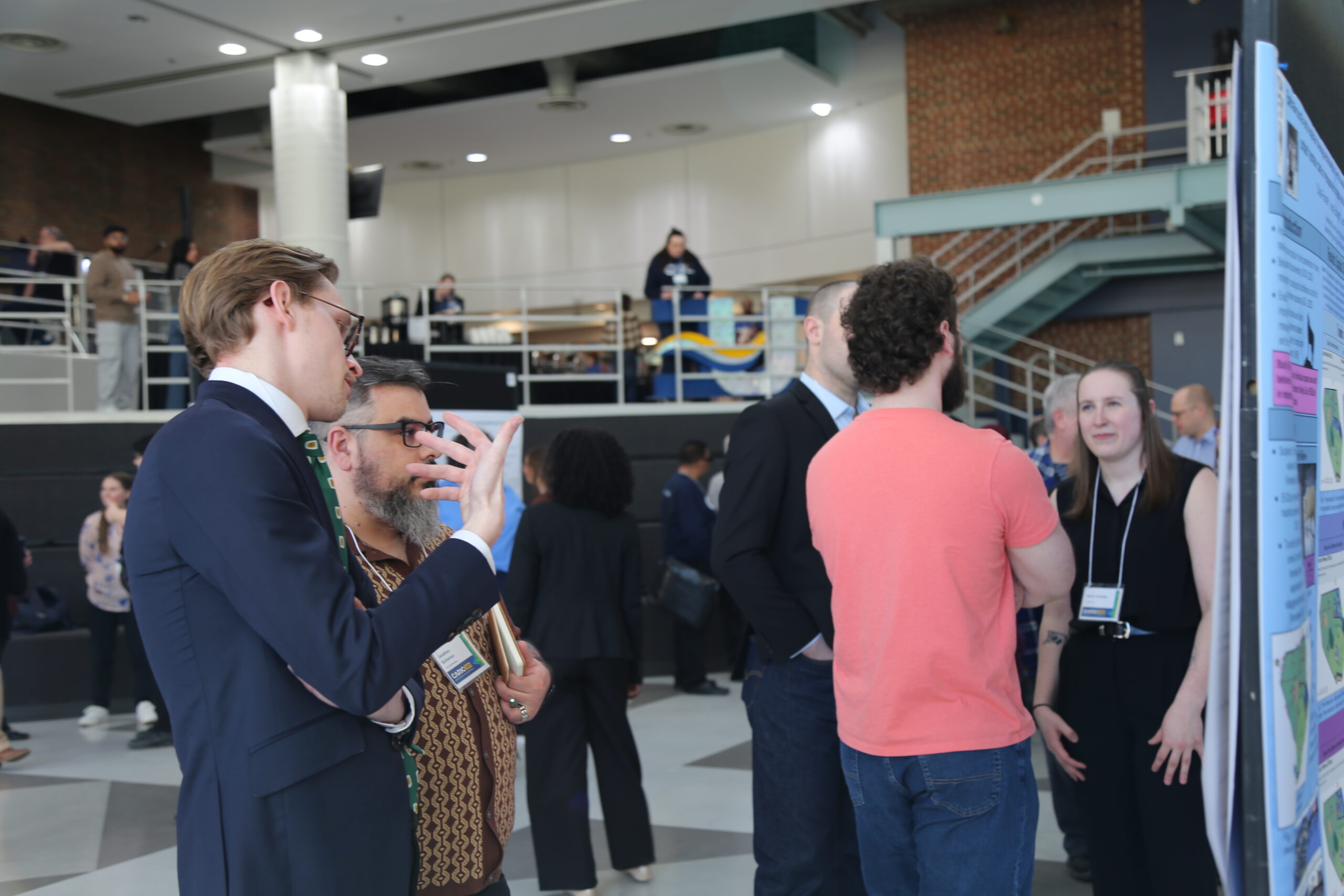
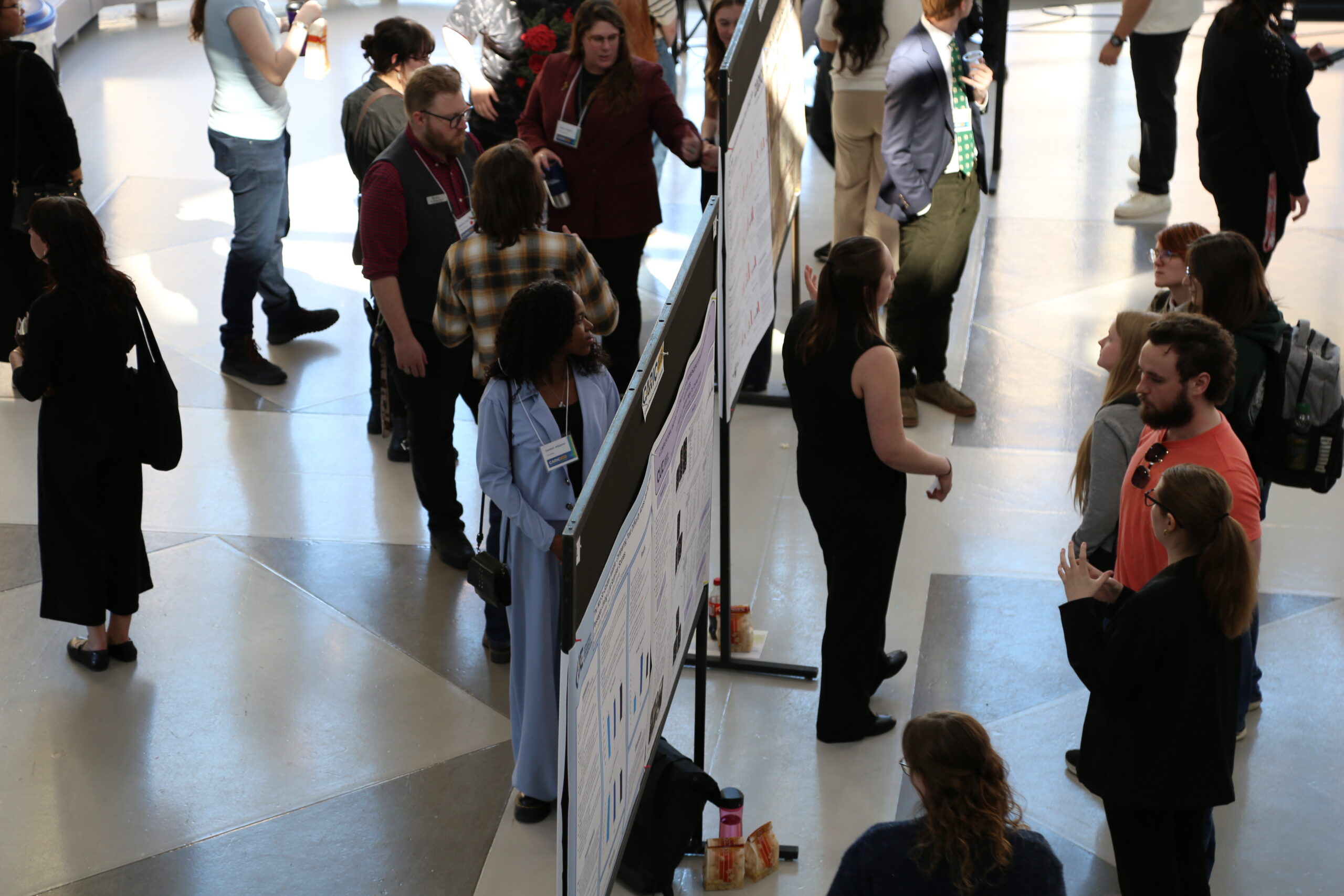
Poster Presentations
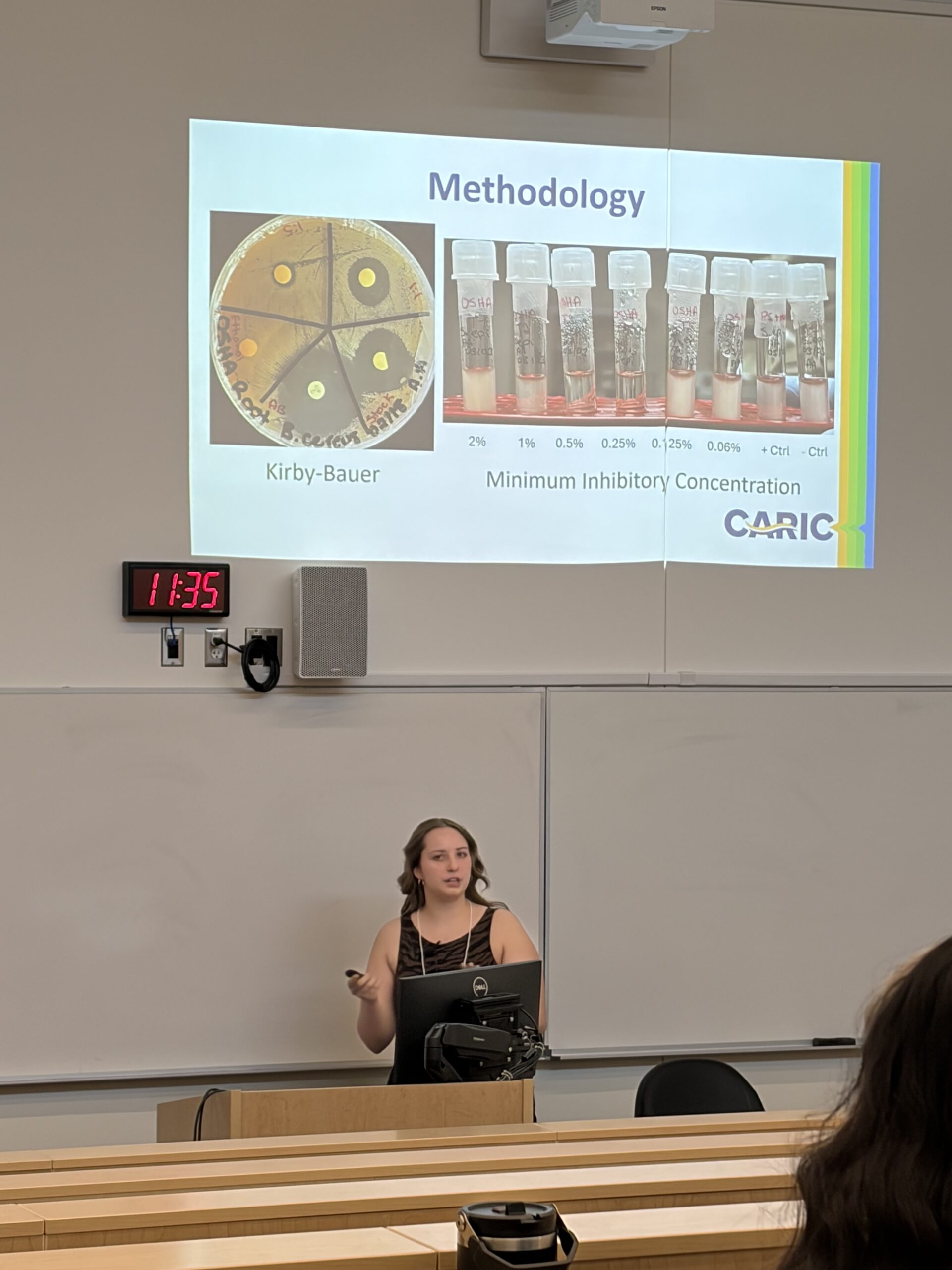
PLANT DERIVED COMPOUNDS IN THE FIGHT AGAINST ANTIMICROBIAL RESISTANCE
By Alexandra Asuchak, Biology
Antibiotic-resistant is a great concern in the field of medicine. Alexandra Asuchak centered her research around the use of natural alternatives (Devils Club, osha root, and pellitory-of-the-wall) versus specific types of common bacteria. This research is an important first step in the battle against infections and helping reduce the misuse/overuse of antibiotics.
THE ILLUSION OF ARRIVAL: WHY ZENO WAS RIGHT FOR THE WRONG REASON
By Brenden Powers, Philosophy, Religious Studies, and Classics
Here Powers argues that we never truly arrive at the destination we are striving for because the destination is always moving (Earth’s rotations, orbit around the sun, etc). Therefore our concept of arriving at a location is really only a relative success within a constantly moving system.
COUNTERFEIT CARD DETECTION USING COMPUTER VISION
By Dominick Tressler, Mathematics and Information Technology
In recent years, collectible trading cards have become big business. The re-sale value of rare collectible trading cards, such as Pokemon or Magic: The Gathering, have spurned pulled a once niche market into the mainstream. And with the growth in popularity comes the risk of counterfeitors. Dominick has researched and proposed a reliable authentication system to easier identify counterfeit attempts and protect the integrity of the trading card re-sale market.
WHEN DO UNDERGRADUATE STUDENTS PREFER AI? INSIGHTS INTO AI SCORING AND FEEDBACK
By Mackenzie Thomas, Psychology
This research examined how students perceive and feel towards the use of AI. Mackenzie’s work highlights that student responses and perceptions towards the use of AI are highly sensitive to the context AI is being used in as well as the stakes involved.
QUITSMART: A BEHAVIORAL TRACKING WEB APPLICATION FOR REDUCING SMOKING, VAPING, AND CANNABIS USE
By Om Patel and Nasim Hajari, Mathematics and Information Technology
Om and Nasim have taken the concept of an app to help track triggers and behaviour related to smoking, vaping, and cannabis use by going one step further that learns the patterns of the user and offering tailored support for the user rather than generic tips and advice.
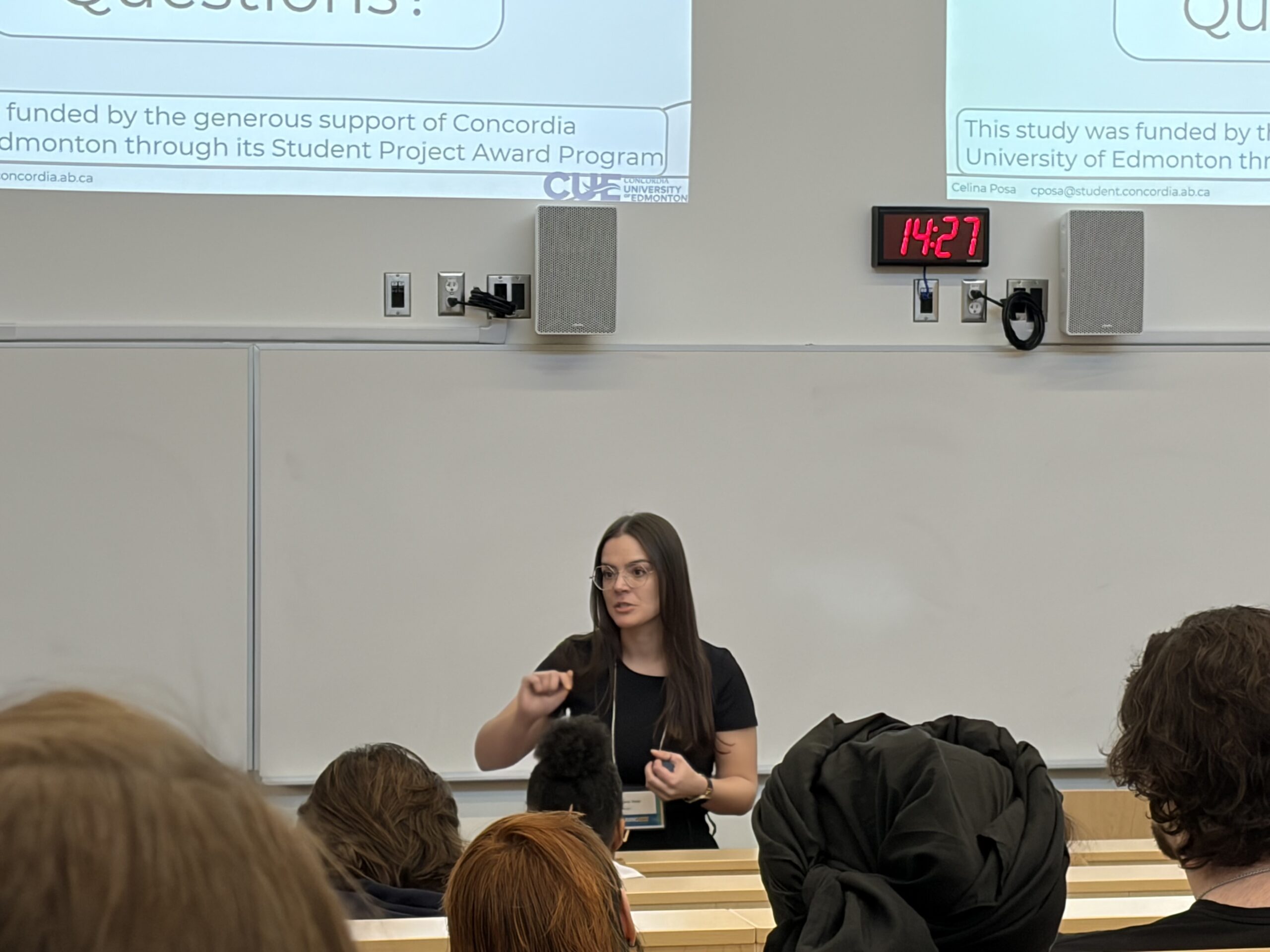
Oral Presentations
ARTIFICIAL INFLUENCERS (AI) VS HUMAN INFLUENCERS: IMPLICATIONS FOR CONSUMER TRUST AND HUMAN RESOURCE STRATEGY
By Ananya Tripathi, Management
Drawing on previous academic literature, this work goes into the perceptions of AI influencers and human influencers and how these perceptions influence trust, authenticity, and engagement with brands and products.
CAN VIDEO GAMES INCREASE OUR UNDERSTANDING OF ANCIENT MYTH?: AN ANALYSIS OF THE GAME HADES
By Elora Charabin, Philosophy, Religious Studies, and Classics
Elora uses the video game, Hades by Supergiant Games, to analyze the portrayal of Greek mythology in popular culture. Is accuracy always necessary? Elora argues that sometimes, the creative freedom taken by artists and writers isn’t a bad thing in helping provide an entry point into the mythology and its educational value.
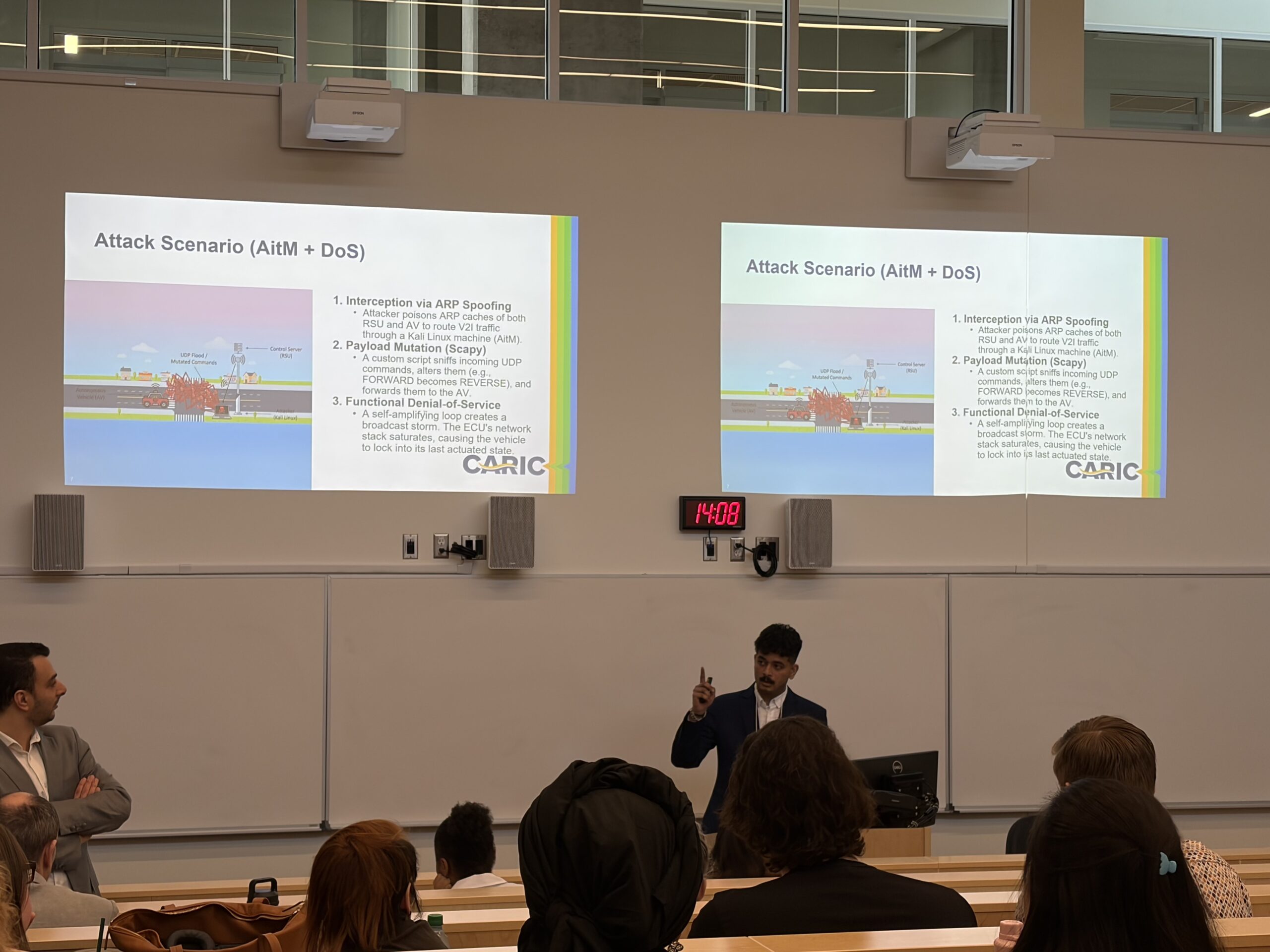
UNAUTHENTICATED COMMAND INJECTION AND DENIAL OF SERVICE ATTACKS ON AUTONOMOUS VEHICLES: EVALUATION AND DEFENSIVE STRATEGIES
By Harsh Parekh, Parth Vikrambhai Suchak, and Smit Kalpeshbhai Patel, Information Systems Assurance Management, Information Systems Security Management
We are gradually seeing more and more autonomous cars on the road, and with them comes the risk of cyber-security attacks against them. Using a small test vehicle, this research looks at the vulnerabilities of autonomous vehicles and then tests various methods to protect the vehicle or interrupt the attack against it.
“LIFE FULL OF LOVE”: A RCT TESTING A NEW WELLBEING INTERVENTION
By Celina Posa, Psychology
What happens if we paid attention to all of the different types of love we encounter in our day-to-day life? From self-love, to moments of awe, to friendship, this research had participants tracking 14 different types of love over a 2 week time period.