Concordia University of Edmonton Researcher Receives an NSERC Discovery Grant of over $200K for Research on Fever and Immunity
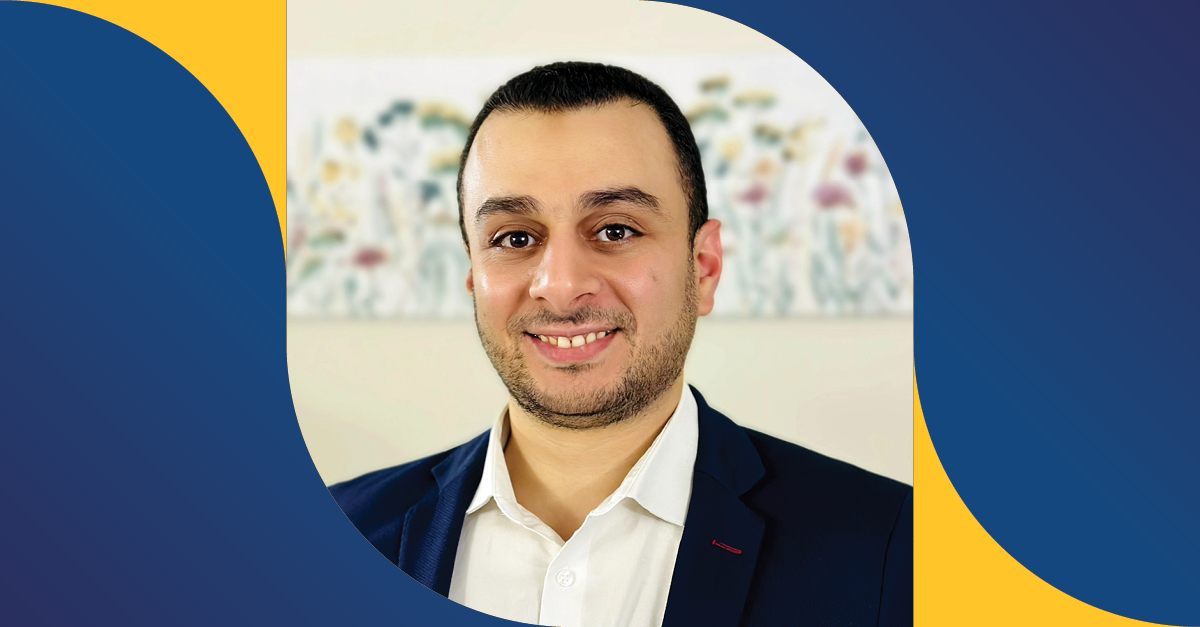
Concordia University of Edmonton (CUE) celebrates the Natural Sciences and Engineering Research Council of Canada (NSERC) Discovery Grant and Discovery Launch Supplement awarded to Dr. Amro Soliman, Assistant Professor, in the Department of Biological and Public Health Sciences for his important work on fever and immunity.
Understanding Fever’s Hidden Purpose
At the centre of the research is a simple but largely unanswered question: how does a warmer body actually help immune cells do their job?
Dr. Soliman’s work explores how increases in body temperature (driven by fever) reshape the metabolism of immune cells, changing how those cells communicate, move, and respond to pathogens.
His research suggests that even small shifts in temperature can meaningfully alter immune cell behaviour, reframing fever as a coordinated response rather than a side effect to be suppressed.
A clearer understanding of this relationship could eventually shape the approach to fever management and possibly inform new therapies that work with the immune system’s natural defenses rather than against them.
Building the Next Generation of Researchers
Dr. Soliman’s lab has become a launching pad for CUE’s undergraduate researchers.
Students working with Dr. Soliman aren’t relegated to observation; they conduct experiments, analyze data, and take part directly in research discussions, the kind of hands-on involvement many students wouldn’t encounter until graduate school.
That access has translated into real outcomes: undergraduate researcher Madeline Wong, who worked in Dr. Soliman’s lab, received a competitive NSERC Undergraduate Student Research Award, presented her findings at multiple national conferences, and won Best Poster Presentation at the Canadian Society for Immunology National Conference.
With this funding, Dr. Soliman expects the pipeline of undergraduate involvement and mentorship to continue growing alongside it.
“Fever is one of the oldest and most conserved defense mechanisms, yet we still don’t fully understand how it works at the cellular level,” said Dr. Amro Soliman. “This funding allows my lab to dig deeper into that question, and to keep involving CUE undergraduate students directly in research that could ultimately shape how infections and inflammatory diseases are treated. I am incredibly grateful to NSERC for supporting this important research”.
Acknowledgments
Concordia University of Edmonton and Dr. Amro Soliman acknowledge the generous support of the Natural Sciences and Engineering Research Council of Canada (NSERC).
Concordia University of Edmonton et Dr. Amro Soliman remercie le Conseil de recherches en sciences naturelles et en génie du Canada (CRSNG) de son généreux soutien.