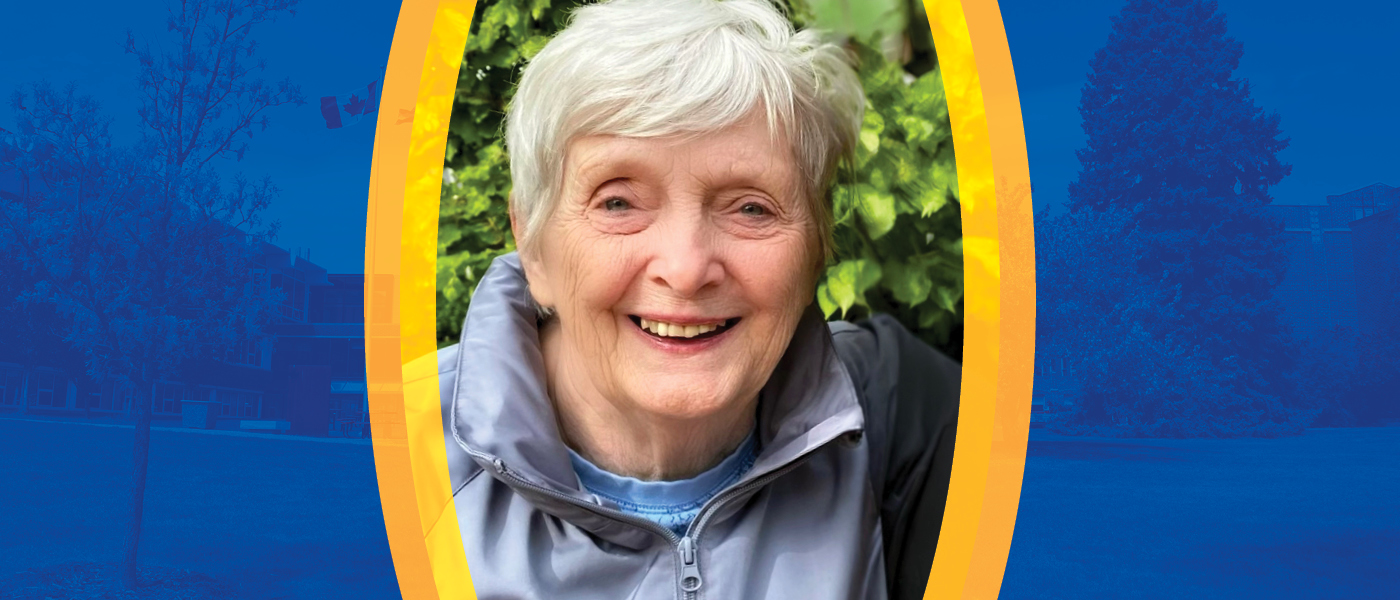
Alumni Spotlight: Marilyn Scott
We recently sat down with alumna Marilyn Scott to discuss her time as a student at Concordia and how her education helped shape her successful professional career. Read her inspiring story below.
What year did you graduate from Concordia, and what program or focus did you pursue here?
I started at Concordia in grade 10 in 1957.
When I attended Concordia it was mainly a Lutheran high school with grades 10 – 12 and one year of university. The university year was to prepare young men to transfer to a seminary in the USA to become Lutheran ministers and to prepare young women to transfer to Lutheran teacher training colleges in the USA to become Lutheran teachers.
I graduated from high school in 1959 and graduated from one year of college in 1960.
What was your overall career journey? How did your path unfold after graduation, and what are a few highlights or roles from your career that you are most proud of?
I graduated from Concordia Teacher’s College in River Forest, Illinois in 1964 with a 4 year Bachelor of Science in Education. Between my third and final year I taught grade one in Sheboygan, Wisconsin.
When you graduated from your degree from River Forest, you were assigned to a school. I wanted to come back to Canada, but there were only four Lutheran elementary schools in Canada at the time. I lucked out and was sent to teach at Zion Lutheran School in Cloverdale, B.C.
I taught 27 students in grade 1- 3 in a split class. It was challenging but I loved it. It sparked creativity. Once a week we sat on the floor on a satin blanket and “visited” different countries on the large world map. Students had the opportunity to taste various ethnic foods, even deep fried locusts. Reading games with puppets for those having trouble reading. Cheerios became a math tool.
At the end of the first year I got engaged and was married the following summer and moved back to Alberta. I intended to continue teaching, but that was not to be. However, I did do some private tutoring, ESL teaching and spent four winters for eight weeks at a time working in eight schools in South Africa. I also taught grade one for a year in Vancouver, Washington.
I became a writer after Alberta Education refused to honor my teaching degree because of the year I took at Concordia before it became affiliated with the U of A.
I have been a freelance writer since 1971.
What drew you to Concordia originally, and what was campus life like back then?
I was badly bullied in junior high and our medical doctor advised my parents to change schools. In those days you had to go to the high school in your area. Although it cost money, my parents decided Concordia would be a good option. I was very withdrawn so it was decided dorm life would allow me to participate more than if I went home every day. After a month I felt I was safe and I blossomed. There were only about 125 students at the time so we became family.
When I attended, Concordia was mainly a high school operated by the Lutheran Church. The majority of students were underage so there were plenty of rules and regulations and campus life was somewhat regimented.
In 1960 when I graduated from the one year college program there were 12 faculty and 111 students. Only 15 students were from Edmonton. The rest were from other parts of Alberta, B.C., Saskatchewan, Manitoba and Ontario with one student from the USA and one from Venezuela. Almost everyone lived on campus in the dormitories. There was no visiting allowed between the male and female dorm rooms.
In the girl’s dorm there was a wakeup buzzer at 6:30am where you jumped out of bed and hoped to get into the shower before the hot water vanished.. Meals were served family style (Please pass the creamed beef.) with assigned table sitting, that changed several times during the year. Everyone was expected to attend breakfast and chapel.
Classes usually began at 8:30am. Study hours were from 7:30 to 9:30pm followed by chapel. The canteen was run by students and opened after chapel so you could buy snacks. There was an A&W where the gym now exists and if you had the energy you could race across the field and get a 15 cent cheeseburger before lock down. In the girls dorm the doors were locked and a master switch was pulled at 10:30pm by our house mother. Lights out! There were curfews and restrictions on leaving campus on the weekends.
When we weren’t in classes there were plenty of activities to keep us busy: choirs, basketball, hockey, class parties, talent shows, committees, housekeeping duties and romance.
Homesickness, heart breaks, tears, laughter, nicknames, jokes and teenage angst were part of life on campus.
We were a family and for those of us left, we still are. Many of us have continued to stay in touch. We have had three class reunions and did a cruise to Alaska. Our numbers are shrinking, but every six months 12 of us (now down to 8), from the Edmonton area meet at Teddy’s on Jasper Avenue for Sunday brunch. Phone calls to classmates in other provinces happen on a regular basis.
Looking back, what specific course, project or professor had the biggest influence on who you are today?
I became interested in writing when I became a writer for the school newspaper – The Aurora Borealis. Through regular writing for the paper I honed my writing skills which I continued to do for the school newspaper when I went to River Forest.
My connection to Concordia didn’t end with my graduation. In the 1970s and 1980s I wrote and directed children’s theatre at Concordia and directed several plays which became the beginning of the drama program. We even put on weekend performances of the children’s theatre productions at the Citadel Theatre.
Having watched the world and CUE evolve over the last several decades, what advice would you share with today’s graduating class?
Stay connected.
Why do you feel it’s important for alumni to stay connected to their alma mater after graduation?
If you stay connected, it can give you a feeling of belonging to something bigger than yourself. There is always the possibility of networking and furthering your career path but having lasting friendships that provide laughter, sharing and support is priceless.